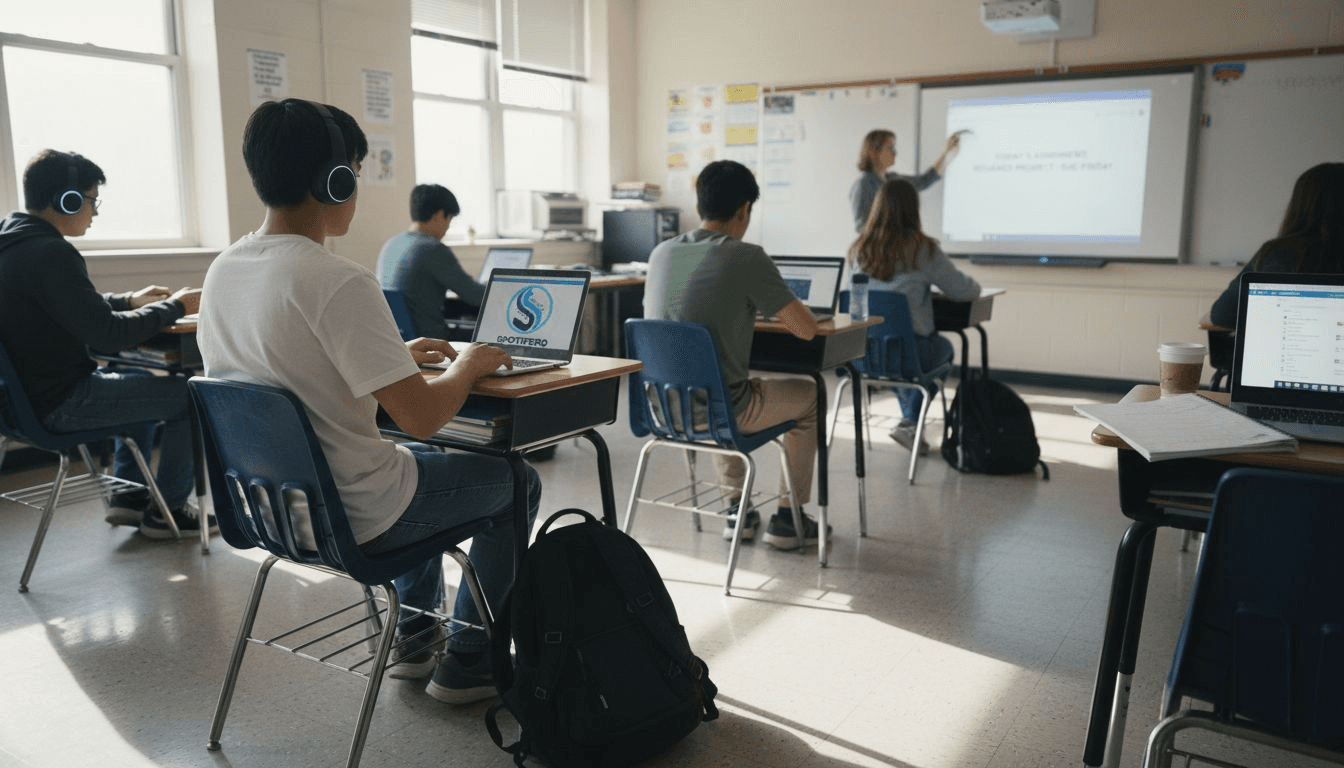
Many view technology in education as simply a tool to enhance traditional teaching. This perspective misses the complete picture. Technology now fundamentally reshapes how we teach, learn, and assess knowledge. From AI-powered personalized learning to virtual reality classrooms, modern education has become a complex ecosystem where intelligent technologies enable entirely new pedagogical approaches and learning experiences.
Table of Contents
- Core Intelligent Technologies Shaping Education in 2026
- Integration of Technology in Pedagogy and Learning Environments
- Benefits and Measurable Impacts of Technology in Education
- Challenges, Risks, and Ethical Considerations in Educational Technology
- Practical Strategies for Effective Technology Use in Education
- Explore Spotifero's Educational Insights and Analysis
Key takeaways
| Point | Details |
|---|---|
| Intelligent technologies drive personalization | AI, IoT, VR, big data, and cloud computing create adaptive, learner-centered education systems. |
| Teacher capability determines success | Effective technology adoption depends more on educator training than just providing access to tools. |
| Balance prevents cognitive risks | Overuse can reduce reasoning and writing skills by up to 50%, requiring thoughtful implementation strategies. |
| Data analytics improve outcomes | Personalized learning reduces dropout rates by 18% and boosts retention significantly. |
| Big Tech shapes education systems | Technology companies increasingly influence educational frameworks, data control, and knowledge delivery. |
Core intelligent technologies shaping education in 2026
Smart education relies on diverse intelligent technologies including AI, IoT, VR, big data, cloud computing, and smart devices. These technologies form five interconnected pillars: intelligent technology infrastructure, smart pedagogy methods, learner-centered approaches, smart learning environments, and intelligent learners.
Artificial intelligence powers adaptive learning systems that adjust content difficulty and pacing based on individual student performance. Machine learning algorithms analyze learning patterns to identify struggling students before they fall behind. AI tutoring systems provide instant feedback and personalized explanations tailored to each learner's knowledge gaps.
The Internet of Things connects classroom devices, wearables, and sensors to create responsive learning environments. IoT enables real-time monitoring of student engagement, environmental conditions like lighting and temperature, and equipment usage. Smart boards, interactive displays, and connected lab equipment create seamless digital-physical learning experiences.
Virtual and augmented reality technologies transform abstract concepts into immersive experiences. Medical students practice procedures in VR operating rooms. Engineering students manipulate 3D models of complex machinery. History classes explore ancient civilizations through virtual field trips.
Big data analytics processes massive amounts of student interaction data to reveal learning patterns and predict outcomes. Cloud computing provides scalable infrastructure that makes sophisticated educational tools accessible to institutions of all sizes. Students access learning resources from anywhere, while educators collaborate across geographic boundaries.
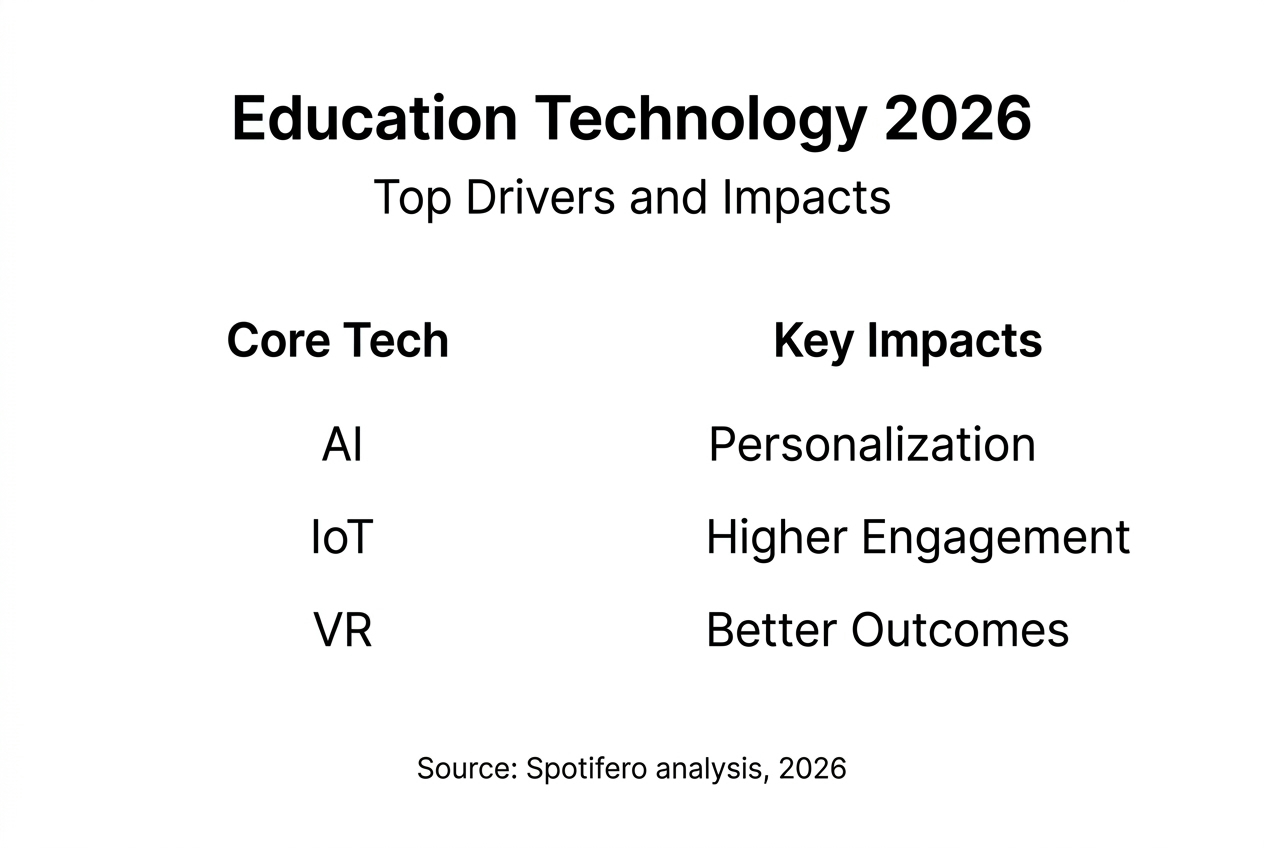
| Technology | K-12 Applications | Higher Education Applications |
|---|---|---|
| AI & Machine Learning | Intelligent tutoring systems for math and reading | Adaptive learning platforms for complex subjects |
| IoT Devices | Smart classrooms with connected whiteboards | Laboratory equipment monitoring and data collection |
| VR/AR | Interactive science simulations | Engineering design and medical procedure training |
| Big Data Analytics | Early intervention for struggling students | Research data analysis and predictive modeling |
| Cloud Computing | Collaborative project platforms | Distributed computing for computational research |
Different technologies serve different educational levels, with intelligent tutoring systems proving especially effective in K-12 mathematics while VR excels in higher education engineering programs. The key is matching technology capabilities to specific learning objectives and student developmental stages.
Pro Tip: Choose technologies that align with your specific educational goals rather than adopting tools simply because they're trendy. A well-implemented basic system outperforms a poorly integrated advanced one every time.
Integration of technology in pedagogy and learning environments
Five pillars of smart education emphasize intelligent technology, smart pedagogy, and learning environments working together. Smart pedagogy shifts focus from teacher-centered instruction to learner-centered facilitation where educators guide discovery rather than simply transmit information.
Smart learning environments leverage connected devices and data analytics to personalize every aspect of the educational experience. Classroom layouts adapt to different learning activities. Content delivery adjusts to individual comprehension speeds. Assessment methods align with diverse learning styles and demonstrate mastery through multiple formats.
5G networks and edge computing enable real-time adaptive teaching at scale. Teachers receive instant analytics dashboards showing which students grasp concepts and which need additional support. AI assistants suggest intervention strategies based on successful patterns from thousands of similar situations.
Teacher capability remains the critical factor determining successful technology integration. Providing iPads without training teachers to use them effectively wastes resources and frustrates everyone involved. Professional development must focus on pedagogical transformation, not just technical skills.
- Educators learn to design technology-enhanced lessons that promote higher-order thinking
- Teachers develop skills to interpret learning analytics and adjust instruction accordingly
- Professional learning communities share effective technology integration strategies
- Ongoing coaching supports teachers as they experiment with new approaches
Intelligent technology is a transformative tool for teaching and learning, impacting pedagogy through AI, IoT, and 5G connectivity that enables personalized, adaptive, and collaborative educational experiences.
Successful integration requires rethinking classroom roles, assessment methods, and curriculum design. Technology enables competency-based progression where students advance upon demonstrating mastery rather than sitting through fixed time periods. Project-based learning becomes more feasible when collaboration tools connect students with experts, resources, and peers globally.

Benefits and measurable impacts of technology in education
Educational technology delivers measurable improvements across engagement, retention, and academic performance metrics. UX improvements to online platforms increased engagement by 50% in documented case studies. Better interface design, clearer navigation, and responsive features keep students actively participating rather than passively consuming content.
Personalized learning systems demonstrate particularly strong outcomes. Personalized learning reduced dropout rates by 18% in a two-year implementation study while simultaneously improving grade averages and course completion rates.
| Metric | Before Personalized Learning | After Implementation | Change |
|---|---|---|---|
| Dropout Rate | 22% | 18% | -18% reduction |
| Course Completion | 73% | 86% | +18% increase |
| Average Grade | C+ | B | +0.5 grade improvement |
| Student Satisfaction | 68% | 82% | +21% increase |
Learning analytics provide specific advantages that translate to better outcomes:
- Increased student motivation through immediate feedback and visible progress tracking
- Enhanced problem-solving abilities by identifying knowledge gaps and suggesting targeted practice
- Improved academic performance via early intervention when students struggle
- Better resource allocation as educators focus attention where it's needed most
Technology-enhanced learning combined with learning analytics improves STEM outcomes by helping students visualize abstract concepts, practice skills in safe simulated environments, and receive personalized feedback at scale.
Implementing personalized learning effectively requires systematic approaches:
- Assess current student knowledge levels using diagnostic tools to establish baselines
- Define clear learning objectives with measurable milestones for each student cohort
- Select adaptive platforms that adjust content based on demonstrated mastery
- Train educators to interpret analytics and modify instruction based on insights
- Monitor engagement metrics and academic outcomes to evaluate effectiveness
- Iterate based on data, refining approaches that work and abandoning ineffective strategies
- Provide faculty incentives that reward student growth rather than just absolute achievement
Pro Tip: Align personalized learning interventions with measurable milestones and provide faculty incentives based on student growth metrics rather than absolute performance scores to encourage working with struggling students.
Challenges, risks, and ethical considerations in educational technology
Technology integration carries significant risks when implemented without proper safeguards. Overuse of technology reduces practice of key cognitive skills like reasoning and writing. Students who rely too heavily on AI writing assistants never develop the critical thinking that comes from wrestling with complex ideas and articulating arguments.
Specific cognitive skill risks include:
- Decreased reasoning ability when AI provides answers without requiring students to work through problems
- Reduced writing proficiency as grammar checkers and AI assistants replace composition practice
- Diminished attention spans from constant device notifications and multitasking habits
- Weakened memory formation when students know information is always instantly accessible
- Impaired social skills from reduced face-to-face interaction during collaborative learning
Experts urge curtailing digital device use at schools to protect mental health, citing research linking excessive screen time to anxiety, depression, and sleep disruption in children and adolescents. Physical health concerns include eye strain, poor posture, and reduced physical activity during school hours.
Big Tech's growing influence shapes educational data and knowledge flow, raising control concerns. A handful of corporations increasingly determine what educational software schools use, what data gets collected, and how learning gets measured. This concentration of power creates dependencies that limit institutional autonomy and innovation.
Educational technology frameworks often focus on individual user behavior while overlooking systemic issues. Policies emphasize teaching students to use technology responsibly but ignore how platform design exploits attention and collects data for commercial purposes.
Ethical considerations and recommended policies:
- Establish clear data governance policies limiting what student information can be collected and shared
- Require technology vendors to demonstrate educational value through independent research
- Implement digital citizenship curricula teaching critical evaluation of online information
- Create device-free zones and times protecting focused learning and social interaction
- Develop institutional review processes for evaluating new educational technologies
- Mandate transparency about AI decision-making in assessment and placement systems
Teacher capability matters far more than technology access. Providing the latest devices without preparing educators to use them effectively for pedagogical transformation wastes resources and risks harming students through poorly implemented interventions.
Balancing technology benefits against risks requires constant vigilance, data-driven evaluation, and willingness to adjust approaches based on outcomes rather than assumptions or vendor promises.
Practical strategies for effective technology use in education
Successful AI adoption requires system-level changes prioritizing teacher training and sustainable integration rather than simply purchasing software licenses. Effective implementation follows proven best practices:
- Invest in comprehensive professional development teaching pedagogical transformation, not just technical skills
- Start small with pilot programs allowing iterative refinement before scaling institution-wide
- Integrate AI tools thoughtfully to complement traditional methods rather than replace proven approaches
- Monitor student engagement metrics and learning outcomes continuously using analytics dashboards
- Gather regular feedback from students and educators about what's working and what needs adjustment
- Create faculty learning communities where educators share effective strategies and troubleshoot challenges
- Establish clear policies governing appropriate technology use, data privacy, and ethical considerations
Combining traditional learning activities like note-taking with LLM use enhances retention and comprehension better than using either approach alone. Students who take handwritten notes while using AI tools for research and verification demonstrate stronger understanding than those who rely solely on technology.
A balanced approach maximizes benefits while mitigating risks. Use AI for tasks it handles well like providing immediate feedback on practice problems, generating diverse practice materials, and identifying struggling students early. Preserve human interaction for complex discussions, mentoring relationships, and collaborative problem-solving that builds social and emotional skills.
Pro Tip: Regularly evaluate technology impact using analytics and student feedback to iteratively improve implementations, abandoning tools that don't deliver measurable benefits and scaling approaches that demonstrably enhance learning outcomes.
Ethical vigilance requires ongoing attention to how technology companies influence educational practices. Review vendor contracts carefully, understanding what data gets collected and how it's used. Participate in collective advocacy efforts pushing for stronger privacy protections and educational technology standards.
Foster digital literacy skills among students so they become mindful technology users rather than passive consumers. Teach critical evaluation of AI-generated content, awareness of how algorithms shape information exposure, and understanding of digital footprints and privacy implications.
Explore Spotifero's educational insights and analysis
Staying current with educational technology developments requires access to reliable, timely information. Spotifero delivers comprehensive news, expert analysis, and in-depth articles covering education technology trends, research findings, and practical implementation strategies.
Our platform connects educators, students, and technology enthusiasts to insights shaping modern teaching and learning. Whether you're exploring AI integration strategies, evaluating new educational tools, or understanding policy developments affecting schools, Spotifero provides the context and analysis you need. Visit Spotifero's English portal for the latest updates, or explore our Polish and Hungarian editions serving diverse international audiences.
FAQ
What are the main technologies driving smart education today?
AI, IoT, virtual and augmented reality, big data analytics, cloud computing, and smart mobile devices form the technological foundation of modern education. These technologies work together to enable adaptive learning experiences that personalize content, pace, and assessment methods. They create responsive environments where instruction adjusts in real-time based on individual student needs and demonstrated mastery.
How can teachers effectively integrate AI in the classroom?
Teachers should prioritize comprehensive training covering both technical capabilities and pedagogical applications of AI tools. Integrate AI to complement proven teaching methods rather than replace human instruction entirely. Focus implementations on enhancing student engagement and developing critical thinking skills while carefully monitoring how students use AI tools to ensure they're building competency rather than developing dependency.
What risks does technology overuse pose to students' learning and wellbeing?
Excessive technology use reduces opportunities to practice essential cognitive skills including reasoning, writing, and sustained attention. Research links heavy device use to increased anxiety, depression, and sleep disruption among students. Schools should implement balanced approaches with device-free periods, supervision of technology use, and curricula emphasizing traditional skill development alongside digital competencies.
What strategies improve student engagement when using educational technology?
Enhancing user experience design significantly boosts engagement, with documented cases showing 50% increases from interface improvements alone. Combine personalized learning pathways with proactive tutoring interventions guided by analytics insights. Regularly gather feedback from students about their technology experiences and adjust teaching methods based on what resonates with learners while maintaining educational rigor and standards.