
Navigating the avalanche of data and rapid innovation cycles in 2026 has left many professionals struggling to spot emerging technologies before competitors. Traditional intuition-based approaches no longer suffice when breakthroughs emerge faster than ever. This guide delivers structured, data-driven methods to identify and leverage technology trends early, transforming overwhelming information into strategic advantage through systematic foresight.
Table of Contents
- Understanding Technology Foresight And Its Importance
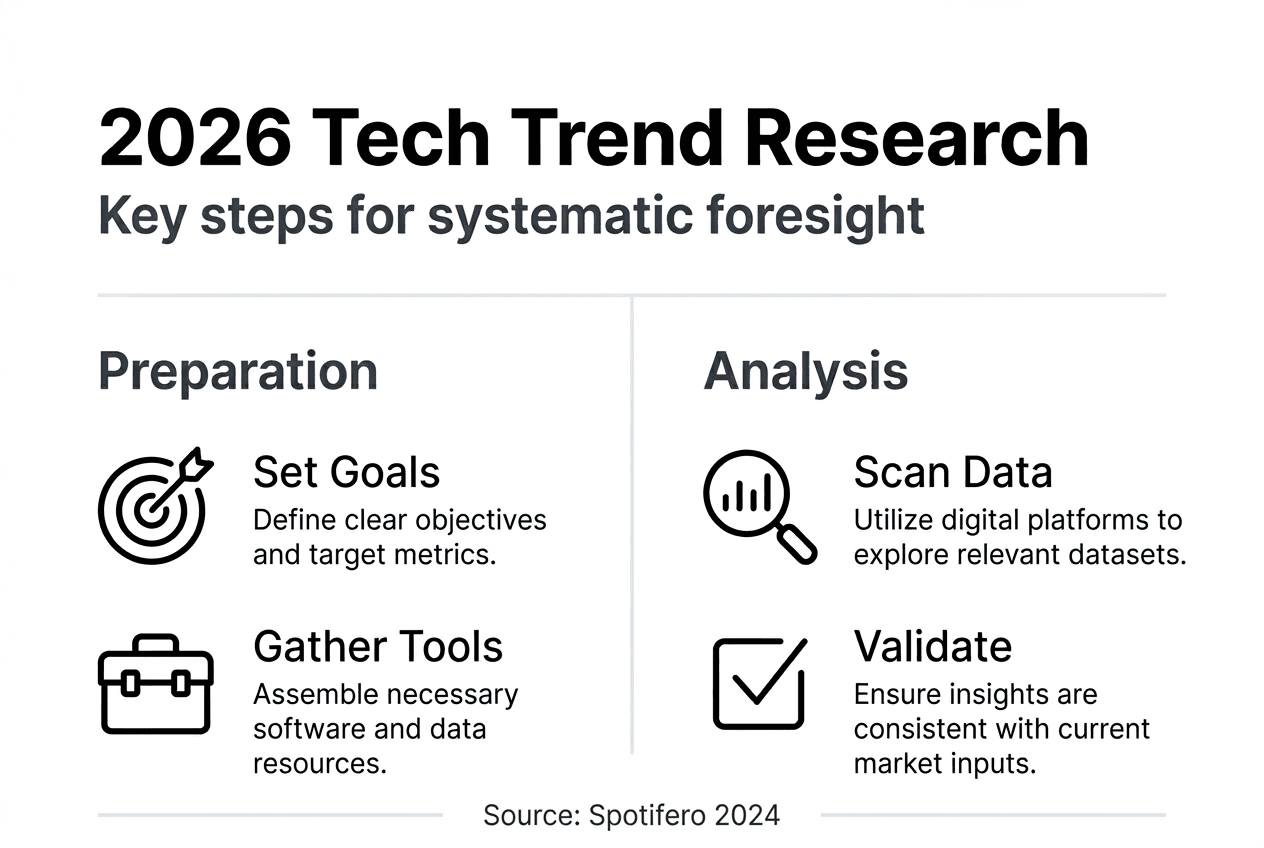
- Preparing To Research Technology Trends: Tools And Prerequisites
- Step-By-Step Guide To Researching And Analyzing Technology Trends
- Common Challenges And How To Overcome Them In Technology Trend Research
- Explore More Tech Insights And Analysis At Spotifero
- Frequently Asked Questions
Key takeaways
| Point | Details |
|---|---|
| Structured foresight beats intuition | Technology trend research requires systematic methods like scenario planning and horizon scanning to anticipate disruptions proactively. |
| AI accelerates insight discovery | Generative AI tools automate data synthesis and pattern recognition, helping you process volumes impossible to analyze manually. |
| Multiple data sources essential | Combine patent databases, academic journals, industry reports, and social analysis for comprehensive trend visibility. |
| Continuous monitoring sustains advantage | Regular updates and cross-functional collaboration ensure your foresight stays relevant as technologies evolve rapidly. |
Understanding technology foresight and its importance
Technology foresight means systematically anticipating future tech developments before they reach mainstream awareness. It transforms reactive guesswork into proactive strategy through structured methods. In 2026's environment of accelerating disruption, waiting for trends to become obvious means losing first-mover advantage.
Strategic foresight helps organizations anticipate change, spot opportunities, and reduce risk. Over 85% of executives say their industries will be disrupted in the next five years. Foresight methods create strategic breathing room by revealing threats and opportunities months or years ahead.
Core foresight techniques include:
- Trend analysis tracking patterns across multiple data streams
- Scenario planning exploring plausible future states
- Delphi studies gathering expert consensus through structured rounds
- Horizon scanning monitoring emerging signals at the periphery
These methods share a common goal: converting uncertainty into informed strategic choices. Organizations practicing systematic foresight identify emerging technologies when they're still immature, allowing time to build capabilities, forge partnerships, or pivot strategies before competitors act.
"The best time to study a technology is before it dominates headlines. By then, strategic positioning opportunities have vanished."
Foresight also reduces risk by revealing potential disruptions to current business models. You gain time to adapt rather than scrambling when market shifts become undeniable.
Preparing to research technology trends: tools and prerequisites
Effective trend research in 2026 demands more than curiosity. You need advanced tools to filter signal from noise in exponentially growing data volumes. Manual analysis risks missing critical technology developments without robust tools. Growing data volume outpaces manual processing capabilities, making AI assistance essential rather than optional.
Essential resources include:
- Patent databases revealing innovation activity and inventor networks
- Academic journal access for cutting-edge research findings
- Industry reports synthesizing market intelligence and forecasts
- News aggregators tracking real-time developments across sectors
- AI-powered text mining tools extracting patterns from unstructured data
Leveraging GenAI for technology foresight improves data-driven decisions. Generative AI can automate technology analysis and information synthesis to enhance foresight. These tools cluster related innovations, identify emerging themes, and flag anomalies that human analysts might overlook.

Beyond tools, adopt a proactive mindset. Systematic foresight requires disciplined information gathering across diverse sources. Multidisciplinary thinking helps connect dots between seemingly unrelated technological advances. A quantum computing breakthrough might transform cryptography, which cascades into cybersecurity strategy shifts.
Pro Tip: Combine AI-driven text mining with human expert validation for best results. Algorithms excel at processing volume and spotting statistical patterns, but human judgment remains essential for interpreting strategic implications and assessing organizational fit.
Establish clear research objectives before diving into data. Define which technology domains matter most to your strategic goals, what time horizon you're exploring, and what questions you need answered. Focused scope prevents analysis paralysis.
Step-by-step guide to researching and analyzing technology trends
Systematic processes separate successful trend research from random information gathering. Follow these steps to identify, evaluate, and track emerging technologies effectively.
-
Define scope and objectives. Align research focus with strategic priorities. Specify technology domains, geographic markets, and time horizons. Clear boundaries prevent scope creep and keep analysis actionable.
-
Collect data from multiple sources. Gather intelligence from patents, academic publications, industry conferences, startup funding rounds, and social media discussions. Emerging technology scouting transforms detection and strategic decision-making. Structured technology scouting creates repeatable processes separating signal from noise.
-
Deploy AI tools for pattern recognition. Use machine learning algorithms to cluster related innovations, identify emerging themes, and quantify momentum. Text mining reveals which technologies are gaining research attention, investment, or commercial traction.
-
Apply foresight methods systematically. Strategic foresight methods help explore plausible futures. Popular foresight methods include scenario planning, Delphi studies, and horizon scanning. Each method offers unique perspectives. Scenario planning explores multiple future states, Delphi studies aggregate expert opinions, and horizon scanning monitors weak signals at the periphery.
-
Evaluate trends by strategic criteria. Assess each technology's potential impact on your industry, current maturity level, and ecosystem interplay. A breakthrough in isolation means less than one that combines with complementary technologies. Consider adoption barriers like regulatory hurdles or infrastructure requirements.
-
Monitor continuously and update insights. Technology landscapes shift rapidly. Schedule regular reviews to track how identified trends evolve. New data might confirm initial assessments or reveal unexpected pivots.
| Foresight Method | Best Use Case | Primary Outcome |
|---|---|---|
| Scenario Planning | Exploring multiple plausible futures | Strategic flexibility and contingency plans |
| Delphi Studies | Building expert consensus | Validated forecasts and priority rankings |
| Horizon Scanning | Detecting early weak signals | Early warning system for emerging disruptions |
| Trend Radars | Visualizing technology maturity | Portfolio view of innovation landscape |
Pro Tip: Prioritize early-stage technologies before mainstream awareness to gain advantage. Once technologies hit major news outlets, strategic positioning opportunities narrow significantly. Your goal is identifying trends when they're still emerging rather than obvious.
Document your research process and findings systematically. Create trend briefs summarizing each technology's status, implications, and recommended actions. This builds organizational memory and enables better collaboration across teams.
Common challenges and how to overcome them in technology trend research
Even systematic approaches face obstacles that can derail trend research efforts. Recognizing these challenges early helps you implement effective countermeasures.
Information overload remains the primary challenge. Exponential data growth creates more noise than signal. Without filters, you drown in irrelevant information while missing critical developments. Strategy: Integrate AI tools that automate initial filtering and clustering. Define clear relevance criteria upfront so algorithms surface only pertinent intelligence.
Timing challenges compound difficulty. Faster tech relevance challenges trend research approaches. The time to study new technology now often exceeds its relevance window. By the time traditional research concludes, technologies have already matured or failed. Strategy: Adopt agile research cycles with rapid iterations rather than lengthy comprehensive studies. Ship preliminary insights quickly, then refine as new data emerges.
High failure rates plague innovative technology pilots despite promising research. High failure rates in AI deployment highlight pitfalls beyond tech capability. Up to 80% of AI projects fail due to deficiencies in strategy and integration, not technology. Research might identify promising technologies, but poor execution undermines value. Strategy: Bridge foresight and execution by involving implementation teams early. Redesign processes to fit new technologies rather than forcing innovations into existing workflows.
Confirmation bias skews interpretation. Researchers unconsciously favor data supporting preexisting beliefs while dismissing contradictory signals. Strategy: Mandate devil's advocate roles in review sessions. Actively seek disconfirming evidence and alternative interpretations before finalizing conclusions.
"The biggest mistakes in trend research come not from missing data, but from ignoring data that challenges comfortable assumptions."
Resource constraints limit research depth. Comprehensive foresight requires time and expertise that stretched teams struggle to provide. Strategy: Focus on highest-priority technology domains rather than attempting universal coverage. Leverage external partnerships with research institutions or specialized consultancies for supplemental capacity.
Pro Tip: Establish cross-functional teams to align strategy and execution early. Include representatives from R&D, operations, and business units in foresight activities. This ensures identified trends translate into actionable initiatives rather than sitting in reports.
Maintain flexibility in your research approach. Rigid methodologies become liabilities when technology landscapes shift unexpectedly. Build in regular process reviews to adapt methods as conditions evolve.
Explore more tech insights and analysis at Spotifero
Staying ahead of technology trends requires ongoing learning beyond any single research project. You need continuous access to expert analysis, breaking developments, and diverse perspectives across the innovation landscape.
Spotifero delivers comprehensive technology news and trend analysis to support your foresight efforts. Our platform aggregates the latest breakthroughs, industry insights, and expert commentary across science, technology, economy, and culture.

Whether you're tracking AI developments, monitoring emerging hardware innovations, or exploring interdisciplinary technology convergence, Spotifero provides the intelligence you need. Access articles in multiple languages including Polish and Hungarian to capture regional innovation trends that global outlets might miss. Our curated content helps you maintain the continuous monitoring essential for effective technology foresight in 2026's fast-moving environment.
Frequently asked questions
How can generative AI improve technology trend research?
Generative AI automates synthesis of vast tech data, enhancing foresight accuracy. AI processes enormous datasets faster than human analysts, identifying patterns and emerging themes across millions of documents. This acceleration means you spot trends weeks or months earlier than manual methods allow, providing crucial lead time for strategic positioning.
What are the most effective foresight methods for technology scouting?
Popular methods include scenario planning, Delphi studies, horizon scanning, and trend radars. Each method addresses different aspects of uncertainty. Scenario planning explores multiple plausible futures, Delphi studies build expert consensus, horizon scanning detects weak signals, and trend radars visualize maturity stages. Combining methods provides robust insights by triangulating perspectives.
How do organizations overcome high failure rates in AI projects?
Failures often stem from inadequate strategy, governance, and integration, not technology itself. Success requires focusing on business cases and strategic alignment before deployment. Redesign processes to leverage AI capabilities rather than automating existing inefficient workflows. Establish clear governance frameworks and involve cross-functional teams from project inception to ensure organizational readiness.
Why does timing matter so much in technology trend research?
Technologies evolve so rapidly that delayed research often produces insights after strategic windows close. Early identification enables proactive positioning through partnerships, capability building, or strategic pivots. Late identification forces reactive responses when competitors have already established advantages. Agile research cycles with rapid iterations help maintain relevance despite accelerating innovation pace.